Dalit Civil Society groups have called on political parties to include clear commitments in their election manifestos to ensure proportional representation of the Dalit community, as guaranteed by the Constitution.
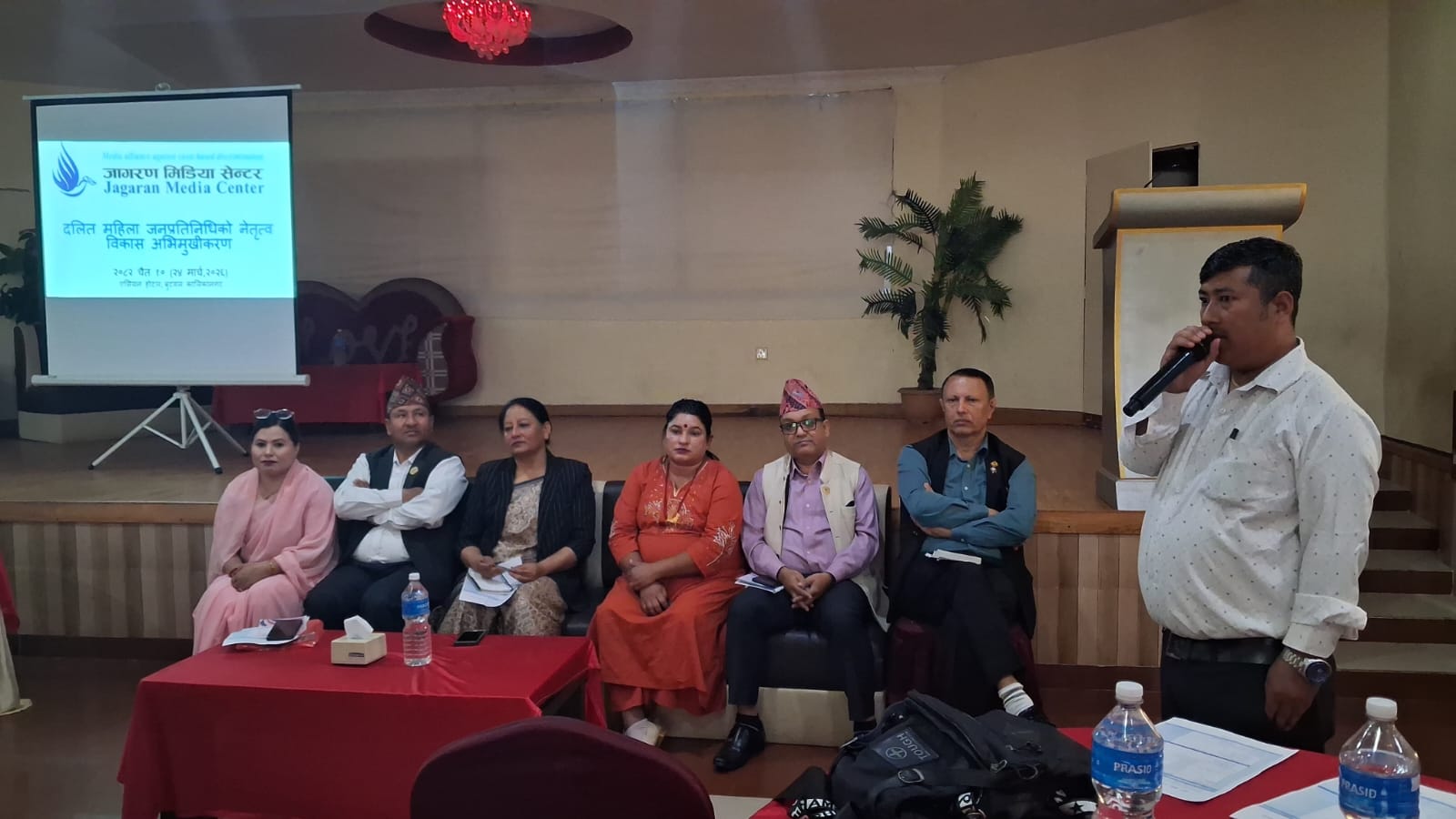
The demand was raised during an interaction program on Dalit issues in political party manifestos, organized last Sunday by the Dalit NGO Federation. Participants stressed that although Articles 40 and 42 of the Constitution provide for the principles of proportional inclusion, these provisions have not been effectively implemented, and therefore, political parties must make firm commitments in their manifestos.
Dalit civil society representatives criticized the mixed electoral system, stating that it has been misused and largely benefits a limited elite group. They demanded a constitutional amendment to introduce a fully proportional electoral system. They also called for constituency-based reservations for women and Dalits under the first-past-the-post electoral system.
Chairperson of the National Dalit Commission, Devaraj Bishwakarma, said that honest commitment from political parties is essential for the effective implementation of Articles 24 and 40 of the Constitution. He emphasized that the constitutional provision ensuring proportional inclusion of Dalits in all state bodies, as well as free education with scholarships for Dalit students from primary to higher and technical education, must be implemented in practice.
President of the Dalit NGO Federation, JB Bishwakarma, said party manifestos should include provisions to ensure health and social security for Dalits, promote and protect traditional occupations, knowledge, skills, and technologies, and provide necessary skills and resources for their development. He also stressed the need for effective implementation of constitutional provisions guaranteeing land and housing rights for landless and homeless Dalits.
Vice President of DNF, Sushil Bishwakarma, stated that political parties must commit to including the Dalit community in the constitutional amendment process and ensure proportional representation and compensation mechanisms for Dalits through constitutional reforms.
The program also demanded commitments to ensure Dalit representation in key executive positions at the federal, provincial, and local levels, as well as in constitutional and diplomatic posts. Participants stressed that proportional representation must be guaranteed across all state institutions, including the civil service, security agencies, diplomatic missions, and constitutional bodies.
Additionally, political parties were urged to clearly include the agenda of abolishing the caste system in all their official documents, train party cadres accordingly, and adopt concrete policies, plans, and programs aimed at dismantling the caste- and race-based hierarchical system.