.jpg)
Kathmandu:
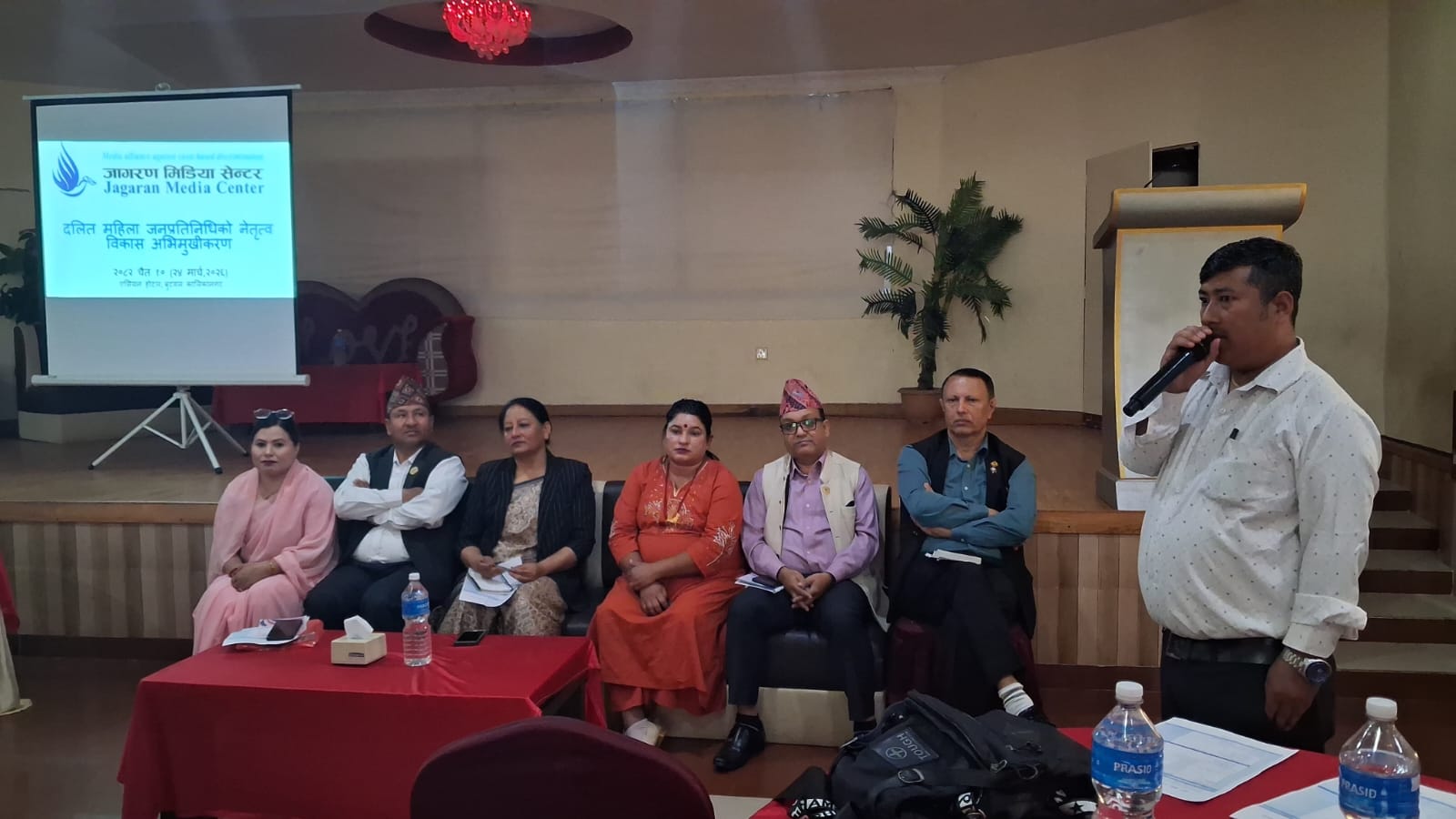
Jagaran Media Center (JMC) successfully held its 26th General Assembly in Kathmandu. Established in 2000 by journalists from the Dalit community, the organization has been actively advocating for social justice, equality, and the elimination of caste-based discrimination through media engagement.
Addressing the General Assembly as the chief guest, former Ambassador of Nepal to Bahrain, Padam Sundas, highlighted the Jagaran Media Center as the only media-based institution in Nepal that consistently advocates against caste-based discrimination and untouchability, while promoting equality and social justice. He acknowledged JMC’s significant role in Nepal’s democratic movement by strengthening Dalit rights through media advocacy.
 Ambassador Sundas emphasized the need to strengthen further the organization’s strategic interventions to combat caste- and gender-based discrimination effectively. He also drew attention to the attack on Radio Jagaran 93.6 MHz, South Asia’s first community radio established by the Dalit community in Butwal, which was damaged during nationwide Gen-Z protests on Bhadra 23 and 24, forcing it to halt operations. He urged local, provincial, and federal governments, along with governmental and non-governmental organizations, to support the revival of the radio station.
As a founding advisor of Jagaran Media Center, Ambassador Sundas reaffirmed his continued intellectual and moral support to ensure the institution remains active and impactful in the future.
 Constituent Assembly member and founding advisor Binod Pahadi stressed the urgent need for collective support to address the financial challenges facing the organization. He called on the government and development partners to assist in the rehabilitation and operation of Radio Jagaran, emphasizing that JMC has produced thousands of skilled Dalit journalists nationwide and remains a key institution for capacity building within the Dalit media community.
He further noted that the global economic downturn and donor funding crisis have affected the organization, making coordination with local and provincial governments essential for sustaining advocacy efforts for Dalit rights. He also recommended expanding province-level programs, dialogues, and capacity-building initiatives to promote professional development among Dalit journalists.
 Founding Vice-President and Advisor Krishna Ranpal underscored the importance of updating the organization’s policies, regulations, and strategic plans to reflect contemporary realities. He emphasized the continued need for strong media advocacy against caste-based discrimination and social exclusion, which persist despite existing policy frameworks.
Chairperson of Jagaran Media Center and Constituent Assembly member Kamala Bishwokarma described JMC as a media legacy for Dalit awareness and rights. She reaffirmed the organization’s commitment to strengthening collaboration and coordination with stakeholders to advance inclusive and equitable media practices.
 “Entering our 26th year reflects the long history of our struggle, yet our mission remains unfinished,” Bishwakarma said. “Caste-based discrimination is still institutionalized, media platforms remain insufficiently inclusive, and Dalit voices continue to be marginalized. Jagaran Media Center was established to change this reality.”
She further stated that state structures, policymaking processes, and media systems remain influenced by caste-based perspectives, making JMC’s role in promoting Dalit representation and inclusive narratives more crucial than ever. She emphasized that Jagaran Media Center functions as a media institution committed to producing and disseminating information that challenges exclusion, inequality, and discrimination.
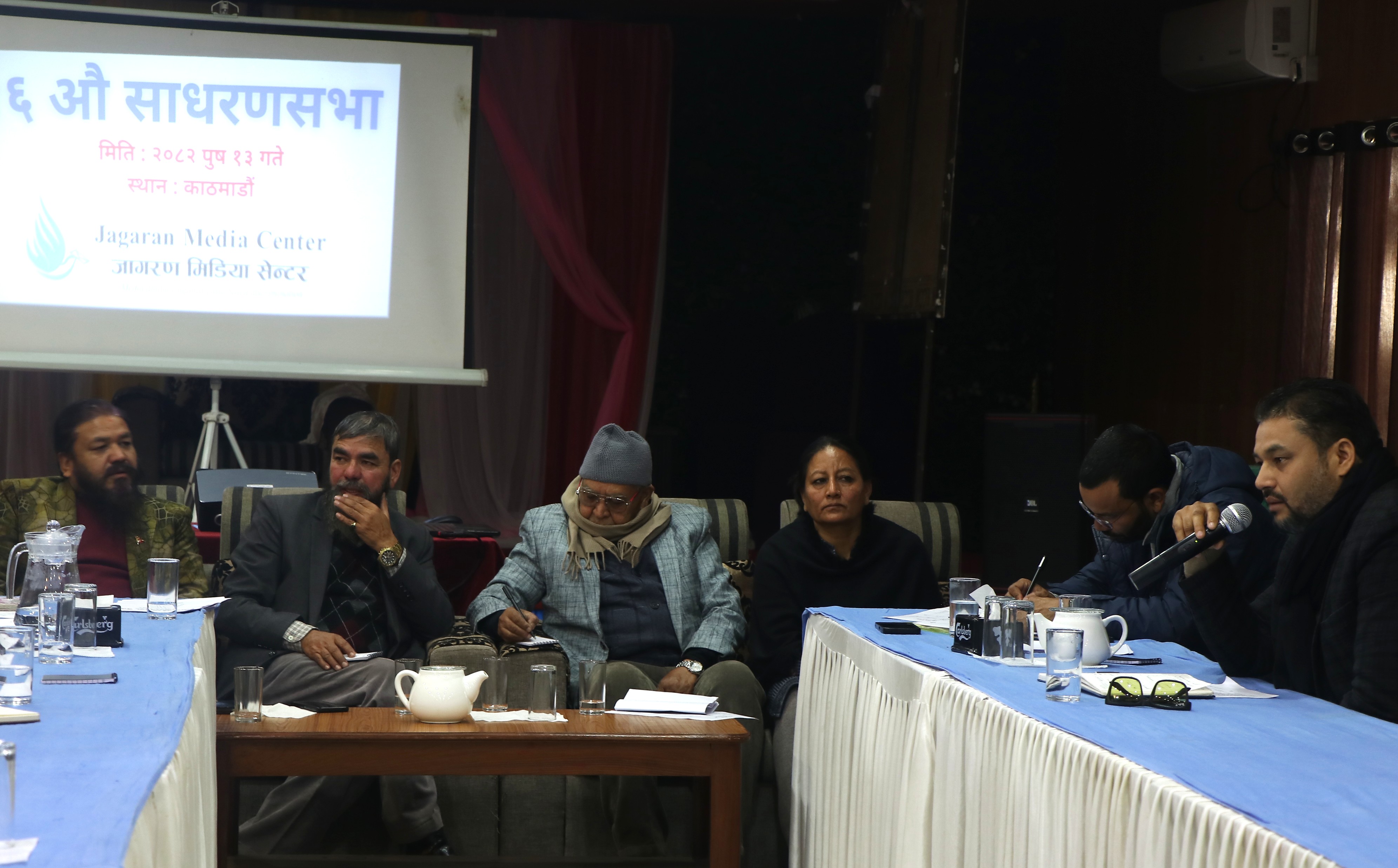
Raj Kumar B.K., Executive Director of Jagaran Media Center, stated that policy-level interference by the state in civil society organizations has been constraining the voices of Dalit and marginalized communities.
He pointed out that the government’s interventionist approach toward civil society reduces the effectiveness of financial and technical support and coordination from international non-governmental organizations and donor agencies. As a result, he warned, civil society and non-governmental organizations in Nepal are likely to face increasing challenges in the days ahead.
Emphasizing the need for preparedness, B.K. said that civil society organizations, including NGOs, must now strengthen their internal strategies for institutional development and sustainability. He also stressed the importance of mobilizing alternative resources to ensure long-term viability and continued advocacy for marginalized communities.
 The General Assembly completed the formation of the executive committee by appointing Jaglag Nepali as General Secretary, Rinku as Treasurer, and Puran Darnal and Rupa Gahataraj as members.
The 26th General Assembly also discussed and endorsed organizational and financial reports, institutional strategies, policies, and future action plans. Participants praised the impact and popularity of Radio Jagaran and the television serial “Dalan,” while expressing optimism and support for Jagaran Media Center’s sustainability, institutional growth, and future endeavors.